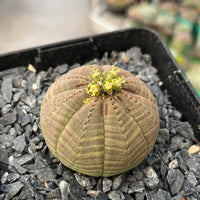


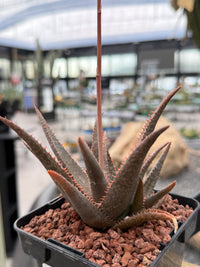
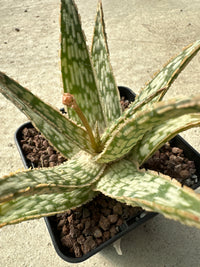


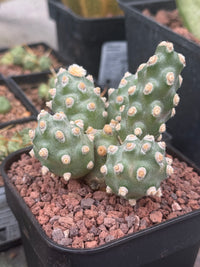








Aylostera pseudodeminuta var. schumanniana | The little crown of intertwined thorns
€10,60 €8,48
Free pickup at
our shop
- 30-day returns, no hassle
- Free shipping to mainland Spain on orders from €79.99
- Guaranteed arrival: if it arrives damaged, we replace it
Description
Aylostera pseudodeminuta var. schumanniana (Backeb.) Backeb.
🌱 Morphology
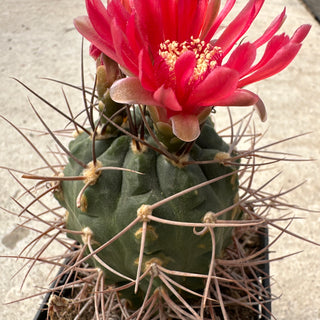
Small cactus, initially growing solitarily and tending to produce offsets with age, forming compact groups. The stems are green, initially globose and becoming somewhat cylindrical as they develop, with tubercles arranged in a spiral. The areoles are small and have very little wool.
Its most striking feature is the combination of two types of radial spines: about 10–12 bristly, thin and flexible ones, up to about 8 mm, accompanied by another six more robust, rigid and extended ones, which can reach 1–1.4 cm. The latter have a yellowish hue at the base and brown in their upper half. It also develops around two central spines, similar in appearance and with yellow and brown tones. The whole creates an irregular, slightly intertwined thorny covering, which distinguishes this form from other populations of Aylostera pseudodeminuta.
The flowers emerge from the basal area of the stems, as is usual in the genus. They are reddish to orange tones and contrast with the green body and dense spines. Flowering occurs mainly during spring, and may repeat in successive waves if the growing conditions are favorable.
🌍 Distribution, habitat and family
This variety was described from plants originating from the north of Argentina, in the province of Salta, where Backeberg indicated an approximate altitude of 3,500 m. The species Aylostera pseudodeminuta is associated with mountainous environments in northwestern Argentina, in open terrain and slopes of the Andes, where it alternates high sun exposure, seasonal rains and cold nights.
Family: Cactaceae · Subfamily: Cactoideae · Tribe: Trichocereeae.
The name schumanniana honors the German botanist Karl Moritz Schumann, a prominent student of cacti. The variety was published by Curt Backeberg and has been maintained in the specialized literature as a form recognizable by its particular spine pattern.
☀️ Lighting
It needs very intense lighting to maintain compact growth and develop dense and well-formed spines. A sunny exposure is recommended, with gradual acclimatization when moved from shaded conditions. As a reference, it can be grown with an approximate PAR DLI of 18–25 mol·m⁻²·day⁻¹, adjusting it to the available temperature and ventilation.
💧 Growth cycle and watering
Winter dormancy. During the cold months, it should be kept practically dry, especially if grown at low temperatures. Growth resumes in spring, when watering can be gradually resumed. During spring and summer, it is recommended to water thoroughly and let the substrate dry out completely before repeating. It is essential to avoid waterlogging and maintain good ventilation.
🌡️ Temperature · USDA Zone 8b
It tolerates minimum temperatures of approximately −7 °C in dry conditions, with the substrate completely dry and good protection from ambient humidity. It is not recommended to subject it to prolonged frosts or low temperatures when the substrate is moist.
🪨 Substrate and nutrition
It needs a very well-draining, airy substrate with a high proportion of mineral components. During active growth, Desert CHOICE® Cactaceae NPK (Ca-Mg) 4-4-7 (4-4) is recommended. Assimilable calcium promotes the formation of firm tissues and the maintenance of turgidity, while magnesium participates in chlorophyll synthesis.
🪴 DesertSTORE presentation
It is grown in a 9x9 cm gourmet black pot, with Desert SOIL substrate and biological activation using mycorrhizal fungi and biofungicides.
This is an inimitable xerophyte grown in Madrid in a technological square pot and with the substrate activated with mycorrhizal fungi and biofungicides.
30-day money-back guarantee
Shop with complete peace of mind. If you are not satisfied, you have 30 days to return your order, no questions asked.
Expert advice with every purchase
Our team provides you with personalized advice on caring for your plants and growing media.
-
Secure and protected payment guaranteed.


Frequently Asked Questions
1. How do you ship plants without them getting damaged?
Each plant is individually packed with protective materials and packaging designed to prevent damage. This ensures that it arrives healthy and in perfect condition at your home.
2. How long will it take to receive my order?
The usual delivery time is 24/48 hours in the Peninsula. For orders placed before 2 PM, we usually prepare and ship on the same day. For orders shipped to Europe, you can check our shipping times here.
3. What happens if the plant arrives damaged?
If your plant suffers any problems during transport, you just have to write to us within the first 24 hours of reception and we will send you a quick solution: replacement or refund of the amount.
4. Do you offer a warranty on the plants?
Yes. In addition to our 30-day return policy, we guarantee that you will receive your plants in perfect condition and ready to thrive in their new home.
5. How do I know which plant is right for me?
On each plant profile, you'll find information on care, difficulty level, and watering and light needs. And if you have any questions, our expert team will guide you according to your space and experience.
6. Can I buy from outside the Peninsula?
We ship throughout the European Union.
7. What payment methods do you accept?
We accept credit or debit card payments, and if you come to our nursery in person, you can pay in cash.

Complete your oasis with these essentials
Discover accessories and complements that will make your plants shine and add a unique touch to your space.
-

Create your own oasis
Explore our cactus and succulent collections to transform your home with a unique touch.
-

Accessories that make a difference
Pots, substrates, and details designed to care for and enhance the beauty of your plants.


Products you've been viewing
