

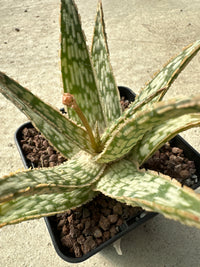











Echeveria subcorymbosa Lau 030 | The Ruby Rosette of the Mixteca
€21,20 €15,90
Free pickup in
our shop(s)
- 30-day returns, no hassle
- Shipping across Europe in 3-5 working days
- Guaranteed arrival: if it arrives damaged, we replace it
Description
🌱 Morphology
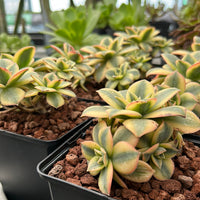
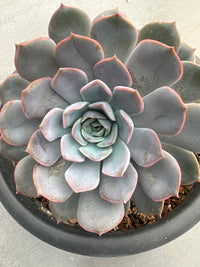
Compact-growing echeveria that tends to form groups with basal rosettes. The rosettes usually measure between 3 and 6 cm in diameter, although they can reach larger sizes in cultivation. Its obovate-spatulate, thick, and upright leaves end in a small reddish tip. The surface displays blue-gray or glaucous green tones, while the underside is speckled with red spots and the margins may turn pink or carmine. The stem is short, brown, and may elongate with age. The surface farina provides a matte finish and helps protect the leaves from solar radiation.
🌍 Distribution, habitat, and family
Species native to Mexico, formally described by Kimnach and Moran in 1994. The Lau 030 form comes from Laguna Encantada, approximately 2 km north of Santiago Juxtlahuaca, in the mountainous region of the Sierra Mixteca Alta, Oaxaca, where Alfred Lau collected it in May 1974. Populations of E. subcorymbosa are also known from other localities in Oaxaca and Puebla. It grows in mountainous and rocky environments with dry periods and relatively cool temperatures. “Lau 030” is a collection number, not a cultivar name.
Family: Crassulaceae. Subfamily: Sempervivoideae. Tribe: Sedeae. Subtribe: Sedinae.
❄️ Temperature — USDA 9b
It is recommended to protect it from severe frosts and, especially, from the combination of low temperatures and wet substrate. As a conservative guideline, it should be kept above 5°C during winter. It can tolerate brief dips close to 0°C if acclimated and completely dry, but it is not recommended to expose it to prolonged frosts in cultivation.
☀️ Lighting
It needs intense light to keep the rosettes compact and accentuate the reddish hues of the leaves. Soft morning sun and very bright exposure are recommended, with gradual adaptation to direct sunlight. In summer, it should be protected from the most intense radiation if temperatures are high. A target DLI PAR of 15–25 mol·m⁻²·day⁻¹ promotes compact growth and attractive coloration. The leaves should not be handled unnecessarily to preserve the farina.
💧 Growth cycle and watering
Opportunistic, with growth mainly during the mild seasons. Development is usually more active in spring and autumn, although it responds to temperatures and water availability. It is recommended to water thoroughly and let the substrate dry out completely before watering again. During intense heat, watering should be reduced if the plant slows its growth; in winter, with low temperatures, it should be kept almost dry. Ventilation and rapid drainage are essential to prevent the roots and clustered rosettes from rotting.
🌸 Flowering
It produces racemose inflorescences with flowers that are relatively large for the size of the plant. The corollas display reddish or orange tones at the bottom and yellow toward the tips. The lower pedicels are longer, so the flowers are arranged in a cluster resembling a corymb, a characteristic that inspired the epithet subcorymbosa. Flowering usually occurs during the warm season, although its timing depends on cultivation conditions and the maturity of the specimen.
🌿 Nutrition
During active growth, Desert CHOICE® Succulents is recommended in moderate doses adapted to the substrate volume. Balanced nutrition promotes the development of healthy roots and firm leaves without stimulating excessively rapid growth. It is recommended to reduce or suspend fertilization during dormancy or when temperatures are extreme.
This is an inimitable xerophyte grown in Madrid in a high-tech square pot with substrate activated with mycorrhizal fungi and biofungicides.
14x14 cm pot
30-day money-back guarantee
Shop with complete peace of mind. If you are not satisfied, you have 30 days to return your order, no questions asked.
Expert advice with every purchase
Our team provides you with personalized advice on caring for your plants and growing media.
-
Secure and protected payment guaranteed.


Frequently Asked Questions
1. How do you ship plants without them getting damaged?
Each plant is individually packed with protective materials and packaging designed to prevent damage. This ensures that it arrives healthy and in perfect condition at your home.
2. How long will it take to receive my order?
The usual delivery time is 24/48 hours in the Peninsula. For orders placed before 2 PM, we usually prepare and ship on the same day. For orders shipped to Europe, you can check our shipping times here.
3. What happens if the plant arrives damaged?
If your plant suffers any problems during transport, you just have to write to us within the first 24 hours of reception and we will send you a quick solution: replacement or refund of the amount.
4. Do you offer a warranty on the plants?
Yes. In addition to our 30-day return policy, we guarantee that you will receive your plants in perfect condition and ready to thrive in their new home.
5. How do I know which plant is right for me?
On each plant profile, you'll find information on care, difficulty level, and watering and light needs. And if you have any questions, our expert team will guide you according to your space and experience.
6. Can I buy from outside the Peninsula?
We ship throughout the European Union.
7. What payment methods do you accept?
We accept credit or debit card payments, and if you come to our nursery in person, you can pay in cash.

Complete your oasis with these essentials
Discover accessories and complements that will make your plants shine and add a unique touch to your space.
-

Create your own oasis
Explore our cactus and succulent collections to transform your home with a unique touch.
-

Accessories that make a difference
Pots, substrates, and details designed to care for and enhance the beauty of your plants.


Products you've been viewing
